| K3 | Events |
 |
|
| K3 | Events |
|
|
|
|
|||
|
|
Events >> | ||
|
|
|||
Sponsors |
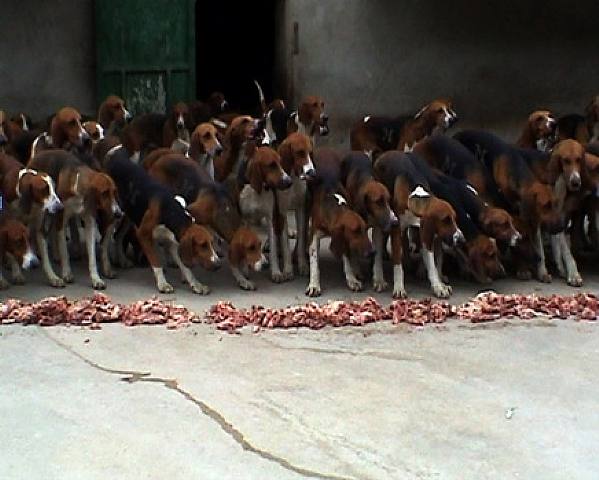
MODERN NATURE curated by Aoife Rosenmeyer opening event 24th October, 7pm show continues until 1st November (view by appointment) §with, Alana Lake, Heather & Ivan Morison, Clara Rüprich, Kilian Rüthemann, Christoph Schreiber All around us images of the natural environment present an entity embodying purity, wholesomeness and other redemptive values. The more we are told the natural world is under threat, the more effective it is as a marketing tool. Though we readily appropriate nature as a symbol, it is presented as a muted version of itself, overlooking its full potential for destruction. Further proof of the strained relationship between man, busy laying claim to the earth, and its incomprehensible forces, is the continued confusion about our effect on the environment. This exhibition creates an interval, a moment to consider our relationship to nature, not as a current trend, nor a timeless constant, but as an ever-shifting negotiation. Alana Lake’s looped film work, Untitled Lion traps the star of the sepia-tinted Metro-Goldwyn-Mayer production logo within the screen. The lion silently roars and roars again without respite. It must continually perform for the camera, its strength and supremacy reduced to a token expression of greatness. Lake’s work takes an image from another era, so suggests nostalgia for a lost, unconquered Eden, as well as raising the question of where the rot set in – when did man really start to abuse his environment? That point could be located a lot earlier in history, but perhaps only from the early 20th century was the abuse on an industrial scale. In contrast, the collective with’s products, language and rationale are eerily familiar in the context of a consumer economy. For Modern Nature with present a glimpse of the environmentally friendly marketing agency G’s recent campaign to promote withwater, a bottled water that is, in their words, “an elexir catalyst”. G’s responsiveness to current environmental trends leads them to propose that withwater’s logo be cut into an arctic iceberg on a massive scale, the resulting ice being bottled as a limited edition, collector’s item, water. Clara Rüprich presents a very different engagement with natural resources in her video work Condition M, which captures a pack of hounds being shown meat, initially prevented from eating, then being allowed to feed by their keeper. These dogs have been fully trained, thus each bears a branded M on their flank, yet the rules of the interaction between keeper and dogs seem paradoxical. The interaction is not modelled on a human relationship but the dynamics of animal packs; the dogs respond to the control, generosity and cruelty of their master in a theatrical exchange that is both impressive and disconcerting. Kilian Rüthemann’s video work Untitled, Vögel underlines how little is understood of the world’s other populations. Birds wheel around in the sky; translucent triangles hover in the air. At first the two elements seem separate, the volume and movement of the birds’ flight vibrant and dynamic, the shapes a graphic addition. Then shapes begin to move and tilt, and it becomes apparent that the movements of three birds draw each triangle. As an abstraction, the work considers comprehension of volume and dimension, and, from there, moves to question the viewer’s role in the construction and comprehension of the world. Christoph Schreiber uses video as an animated picture plane, frequently employing a still camera position and allowing or animating what happens within it. The work Berge is an animation of mountains that emerge from a mist, appearing at first rolling, then looming as massive, impressive forms, which finally speed past with disorienting velocity. Schreiber considers the image of pastoral nature and how it involves managing the environment to accommodate human desires for security and stability, not to mention aesthetics. Sterngeburt presents a gorilla lying on a couch, idly scratching, uninterested in the view outside the window where trees wave in the breeze. In reality, nature cannot be mastered, its domestication a nonsense. If Schreiber’s work has echoes of legend, Heather & Ivan Morison also work with ideas of escape and other worlds. For several years, the Morisons have mapped their experiences in small cards, which recount tales of gardens, forests and nature. Some of these text pieces document the travails of gardeners, such as one that says “Ivan Morison is disappointed with his crop of Red Flare cabbages. Suffering from slug attack, poor soil and a shaded position, they never stood a chance…’. Others report from afar: “Mr & Mrs Ivan Morison do not understand it. Why are they cutting down all the Siberian Larches?” Little or no contextualisation is provided, so the recipient or viewer of the card cannot grasp the entirety of the scene. The format underscores the distance from the scenes described, and suggests a protectiveness of and pride in what is told. Anxiety about the environment has been growing for many years, yet the clamour of concern in the media, which has reframed many discussions, is proving neither productive nor realistic. Let us not forget that humanity has been adjusting, reframing and altering nature for centuries. We can try to tame the environment, but we can rarely master it. Aoife Rosenmeyer |
|
|